
Last updated: Dec 25, 2025
>Published on: October 26, 2023
>The digital asset landscape is littered with the remnants of ambitious projects, but none left a scar as deep or as wide as the collapse of the Terra ecosystem in May 2022. The event triggered a multi-billion dollar implosion, systemic contagion across the industry, and a crisis of confidence in algorithmic stablecoins. From those ashes, however, arose two distinct entities: a new chain, Terra 2.0 (LUNA), and the original, abandoned chain, which was rebranded as Terra Classic. Its native token, LUNA, became Luna Classic (LUNC). Once left for dead, LUNC has persisted, fueled not by a corporate entity but by a fervent and highly organized community dedicated to its revival. This guide provides an unbiased, comprehensive analysis of the Terra Classic project as it exists today, examining its technology, tokenomics, governance, and the immense challenges it faces.
>To understand Luna Classic, one must first understand its origins within the original Terra ecosystem, a project masterminded by Do Kwon and Terraform Labs (TFL). The central proposition of Terra was a decentralized, algorithmic stablecoin called TerraUSD (UST), designed to maintain a 1:1 peg with the US dollar. Unlike collateralized stablecoins like USDC or DAI, UST was not backed by reserves of fiat currency or over-collateralized crypto assets.
>Instead, it maintained its peg through a sophisticated arbitrage mechanism with Terra’s native governance and staking token, LUNA (now LUNC). The system worked as follows:
- To mint 1 UST: A user had to burn $1 worth of LUNA.
- To redeem 1 UST: A user could mint $1 worth of LUNA.
>This dynamic was designed to keep UST at $1. If UST’s price fell below $1, arbitrageurs were incentivized to buy the discounted UST and redeem it for $1 of LUNA, pocketing the difference and simultaneously burning UST to reduce its supply and push its price back up. Conversely, if UST traded above $1, users could burn LUNA to mint new UST, increasing its supply and bringing the price down. This elegant, reflexive relationship was the heart of the ecosystem and supported a burgeoning DeFi economy, most notably the Anchor Protocol, which offered unsustainably high yields on UST deposits.
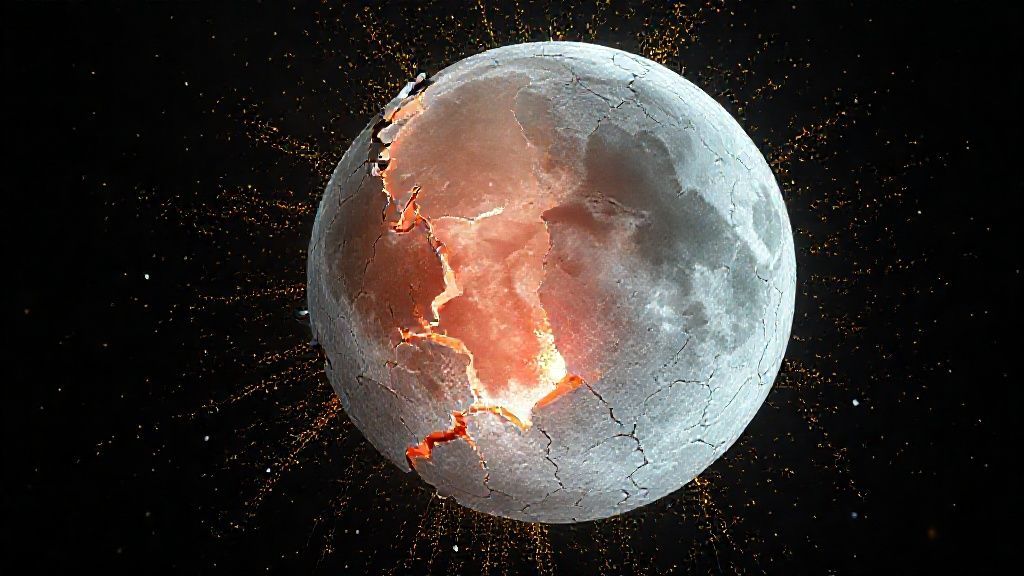
>In May 2022, this mechanism catastrophically failed. A series of large, coordinated withdrawals and trades broke the UST peg. As UST fell, a panic-induced “bank run” began. Arbitrageurs tried to redeem their UST for LUNA, but the sheer volume of redemptions created an infinite minting loop for LUNA. This hyper-inflated the LUNA supply from around 350 million tokens to nearly 7 trillion in a matter of days, crashing its price to fractions of a cent and completely wiping out its value. This event is now known as the “death spiral.”
>In the aftermath, a hard fork was executed. The new chain, “Terra 2.0,” inherited the LUNA ticker, while the original chain was preserved and renamed “Terra Classic.” The original LUNA token was renamed Luna Classic (LUNC), and the failed stablecoin was renamed TerraClassicUSD (USTC). Terraform Labs and Do Kwon moved on to support the new chain, effectively abandoning Terra Classic to its community.
Tokenomics Deep Dive: Hyperinflation, Burns, and Governance
>The tokenomics of LUNC are unlike almost any other project in the crypto space, defined entirely by the hyperinflation event and the community’s subsequent efforts to reverse its effects. The central narrative and investment thesis for LUNC revolves around reducing its colossal supply.
>Supply and Distribution:
- Total Supply: Approximately 6.8 trillion LUNC.
- Circulating Supply: Approximately 5.8 trillion LUNC.
- Staked Supply: Approximately 1 trillion LUNC is staked with validators, securing the network and participating in governance.
>The pre-collapse distribution is now irrelevant. The current ownership is a mix of original holders who were wiped out, opportunistic buyers who entered post-collapse, and exchanges holding large balances. The primary challenge for the LUNC ecosystem is this multi-trillion token supply, which exerts immense downward pressure on the price and makes any significant price appreciation per token mathematically difficult without a drastic supply reduction.
>The Burn Mechanism:
>The cornerstone of the community’s revival strategy is the LUNC burn tax. This is a mechanism, passed through on-chain governance, that applies a tax to all on-chain transactions. A portion of this tax is sent to the community pool for funding development, while the majority is sent to a dead wallet, effectively removing it from circulation forever—a process known as “burning.”
>The tax rate has been subject to community votes and has changed over time. It was famously initiated at 1.2% before being reduced to 0.5% to encourage more on-chain volume. This mechanism’s success is heavily dependent on two factors:
- On-Chain Activity: The more transactions that occur on the Terra Classic network (e.g., sending tokens, interacting with dApps), the more LUNC is burned.
- Exchange Support: Many LUNC transactions occur off-chain on centralized exchanges. The community has heavily lobbied major exchanges like Binance to implement their own burn mechanisms on LUNC trading fees, which has become a significant contributor to the total burn count.
>While billions of LUNC have been burned, it represents a very small fraction of the total supply. The burn narrative is a long-term strategy that requires sustained on-chain utility and exchange cooperation to make a meaningful impact on the supply.
Core Technology and Network Architecture
>Despite its tumultuous history, the Terra Classic blockchain is built on a robust and widely used technology stack. It is a sovereign, public Proof-of-Stake (PoS) blockchain built using the Cosmos SDK and the Tendermint Core consensus engine.
>Consensus Mechanism: As a PoS network, Terra Classic is secured by a set of decentralized validators. These validators are responsible for processing transactions and creating new blocks. They are chosen based on the amount of LUNC staked (or “bonded”) to them. Token holders can delegate their LUNC to a validator of their choice to participate in securing the network and earn staking rewards. This model is energy-efficient and allows for high transaction throughput compared to Proof-of-Work systems like Bitcoin.
>Smart Contract Capability: The chain supports smart contracts through CosmWasm, a platform that allows developers to write smart contracts in various programming languages (like Rust) that compile to WebAssembly (Wasm). This is the technology that enabled the complex applications of the original ecosystem, like Anchor and Mirror Protocol. While most of these dApps are now defunct on the classic chain, the underlying capability remains, offering a foundation for new developers to build upon if they choose to.
>On-Chain Governance: A critical feature of Terra Classic’s current existence is its on-chain governance system. Any user who has LUNC staked can create or vote on governance proposals. These proposals can dictate everything from changing core network parameters (like the burn tax rate) to allocating funds from the community pool to pay development teams. This democratic process is how the community charts the course for the chain’s future in the absence of a central entity like TFL.
Team and Backers: From Terraform Labs to a Decentralized Community
>The leadership and backing of Luna Classic has undergone a complete transformation.
>Original Creators: Terraform Labs (TFL), co-founded by Do Kwon and Daniel Shin, was the sole creator and initial steward of the Terra ecosystem. They raised significant funding from prominent venture capital firms, including Pantera Capital, Coinbase Ventures, and Galaxy Digital. However, following the collapse, TFL and its original backers have completely abandoned the Terra Classic chain. Do Kwon is currently facing severe legal challenges globally, including potential prison time in both South Korea and the United States, casting a long shadow over anything associated with his name.
>Current Leadership: Terra Classic has no CEO, no central office, and no formal leadership structure. It is a truly decentralized, community-run project. Its direction is determined by a combination of influential community members, independent development groups funded by the community pool (such as the “L1 Task Force” or “TerraCVita”), and the collective will of LUNC stakers expressed through governance votes. This structure is both a strength and a weakness. It embodies the decentralized ethos of crypto but can also lead to slow decision-making, infighting, and a lack of a unified, strategic vision.
Future Roadmap and Key Community Milestones
>The roadmap for Terra Classic is not a corporate document but a fluid set of goals emerging from community proposals. The overarching ambition is to restore utility and value to the ecosystem.
- Reducing the LUNC Supply: The primary and most popular goal is to continue burning LUNC through the transaction tax and by encouraging more exchanges to participate. The ultimate, though highly aspirational, goal is to reduce the supply to a more manageable level (e.g., 10 billion tokens).
- Restoring the USTC Peg: A highly ambitious and contentious goal is the effort to re-peg the USTC stablecoin to $1. Various complex proposals have been debated, often involving algorithmic minting/burning, reserve pools, and other mechanisms. Achieving this would be a monumental technical and economic challenge but would, in theory, restore a major utility function to the ecosystem.
- Attracting dApp Development: For long-term survival, the chain needs a reason to exist beyond speculation on the burn. Community-funded teams are working on upgrading the core infrastructure to make it more attractive for developers to build new applications. The goal is to create new use cases that generate real on-chain transactions, thereby fueling the burn mechanism organically.
- Inter-Blockchain Communication (IBC): Efforts are underway to re-enable and upgrade IBC channels, which connect Terra Classic to the wider Cosmos ecosystem. This would allow for greater interoperability and liquidity flows between LUNC and other Cosmos-based assets.
Full Financial Disclaimer & Regulatory Status
>The information provided in this article is for educational and informational purposes only and does not constitute financial advice, investment advice, or a recommendation to buy, sell, or hold any digital asset. Luna Classic (LUNC) is an extremely high-risk asset with a history of catastrophic failure. Its value is highly volatile and speculative, driven primarily by community sentiment and its burn narrative rather than fundamental utility. The project’s original founder, Do Kwon, is facing serious criminal charges in multiple jurisdictions, which creates a significant and unpredictable regulatory and legal overhang for the entire Terra Classic ecosystem. The hyper-inflated supply of LUNC presents a substantial mathematical barrier to significant price appreciation. Potential participants should conduct their own thorough research and understand that they could lose their entire investment. The regulatory status of LUNC and its associated tokens is uncertain and may vary by jurisdiction. You should consult with a qualified financial professional before making any investment decisions.
⚠️ Investment Disclaimer: This article is for educational and informational purposes only and does not constitute financial, investment, or legal advice. Cryptocurrency and digital asset investments are highly volatile and may result in substantial losses. Always conduct your own research, understand the risks involved, and consult with qualified financial advisors before making any investment decisions. Past performance does not guarantee future results.